
BLOG
More related information

- Home
- Blog
- Motorcycle Knowledge
- Off-Road Motorcycle Buying Guide: How to Choose the Right Bike, Engine Size, and Safety Gear
Off-Road Motorcycle Buying Guide: How to Choose the Right Bike, Engine Size, and Safety Gear

In the off-road motorcycle market, there are numerous models available, ranging from entry-level to advanced positions. However, options that simultaneously offer reasonable pricing, adapt to local forest road conditions, and provide stable after-sales support are relatively limited. For beginners or riders preparing to upgrade, picking the right bike from so many choices is a significant challenge. This article will help you quickly understand the unique charm of off-road motorcycles, summarize the key points to consider when choosing a bike, and provide practical safety gear recommendations, helping you more easily find a riding solution that meets your needs.
〈Extended Reading: Motorcycle Buying Guide: Types, Performance, and Safety Tips to Help You Choose the Right Bike〉
What is an Off-Road Motorcycle?
Off-road motorcycles are vehicles specifically built for unpaved surfaces such as mud, sand, gravel, and forest trails, with design priorities different from standard road motorcycles. To handle terrain with significant elevation changes, soft surfaces, and high impact, the chassis is kept as light as possible with a simplified structure for more agile handling. They are also equipped with long-travel suspension systems to absorb vibrations from bumps and reduce the physical strain on the rider.
As for the tires, knobby tires with deeper treads and stronger grip are used to bite into the ground on mud or gravel roads, preventing slips. The overall design goal is to ensure the vehicle maintains stability and control in complex terrain, making it suitable for wilderness riding and various topographical challenges.
〈Extended Reading: Motorcycle Engine Types Explained: Scooter vs. Manual Motorcycle Engines and Which Is Better to Ride〉
Why Can Off-Road Motorcycles Conquer Forest Trails?
The ability of off-road motorcycles to overcome forest trail terrain lies in three core designs tailored for rugged environments, allowing the vehicle to move steadily on bumpy or soft road surfaces.
Long-Travel Suspension System
When riding on forest trails, off-road motorcycles frequently encounter jumps, landings, or impacts with rocks. Therefore, most are equipped with long-travel suspension systems, such as adjustable damping inverted front forks and rear shock systems. This allows the wheels to effectively absorb vibrations from the ground when encountering severe bumps, reducing the impact transmitted directly to the bike frame and the rider. At the same time, it helps the tires stay in contact with the ground as much as possible, maintaining grip and travel stability.
〈Extended Reading: Scooter vs Manual Motorcycle Shock Absorbers | Types, Inspection, and Maintenance〉
〈Extended Reading: Understanding Motorcycle Brake Systems:Drum Brakes, Disc Brakes, CBS, and ABS〉
Off-Road Specific Rims and Tires
Off-road dirt bikes typically use a wire-spoke rim configuration, with 21-inch front wheel and 18-inch rear wheels. Wire-spoke rims possess higher inherent toughness; when hitting rocks or potholes, they do not easily deform or break, making them better suited for harsh riding conditions. The tires are paired with an off-road tread design featuring deep blocks and clear spacing, which can effectively discharge mud and gravel when riding in muddy or sandy terrain, reducing slippage caused by tires getting clogged with soil.
High Torque and Lightweight Body
The focus of trail riding is not on top speed, but on the torque required for climbing and getting unstuck. Most off-road motorcycles are tuned to output torque at low RPMs, providing immediate response as soon as the throttle is opened, making it easier to control the rhythm when encountering uphill or soft surfaces. At the same time, the body adopts a simplified and lightweight design to reduce unnecessary weight, making handling more agile. In the event of a tip-over on a trail, it is also easier to lift the bike back up, avoiding excessive physical exhaustion, making the overall ride safer and more sustainable.
〈Extended Reading: Beginner Motorcycle Buying Guide | A Practical Guide from Riding Experience to Smart Selection〉
Off-Road Motorcycle Selection: Why Your Riding Purpose Matters Most
1. Confirm Riding Purpose
Trail + Commuting
If you mainly commute in the city on weekdays and occasionally head to the suburbs or trails on weekends, it is more suitable to choose an easy-to-handle dirt bike. The overall setup is simple and intuitive, so daily riding won't be a burden, and it can handle gravel roads or basic trails, balancing both commuting and leisure needs.
〈Extended Reading: Manual Motorcycle vs Scooter: Riding Basics, Buying Guide & Top Picks〉
〈Extended Reading: Gear Motorcycle Beginner's Guide: Riding Tutorials & Maintenance Tips〉
Long-Distance Travel
If you are accustomed to long-distance riding and value the comfort of highway cruising, while also hoping to occasionally enter light off-road sections, you may consider models oriented toward long-distance travel. These bikes have more stable and comfortable setups, with weights often exceeding 150kg, making long rides easier. However, in high-difficulty terrain such as deep mud or steep slopes, their agility will be relatively limited.
〈Extended Reading: Is a 250cc Motorcycle Worth It? Key Differences from 150cc & Top Picks〉
2. Choosing the Displacement of an Off-Road Motorcycle
150–250cc models are lighter, weighing approximately 100 to 140kg, with enough power to handle forest trails and light off-road environments, making them very suitable for beginners or female riders. 250–450cc is a mid-range class with significantly more power, providing more confidence on steep slopes, gravel, or muddy road conditions, but it also demands more handling skills and physical strength. Models above 450cc are geared toward competitive or advanced players; they have strong power and direct response, requiring extensive riding experience, so beginners should evaluate their abilities carefully before making a choice.
〈Extended Reading: Are 150cc Motorcycles Worth It? Pros, Cons & Class Differences Explained〉
〈Extended Reading: How to Choose Your Motorcycle CC? A Complete Guide to Classifications, Uses, and Performance〉
3. Matching Vehicle Weight with Height
When choosing a dirt bike, if the weight falls between 100–140kg, it will be easier to handle, saving effort during low-speed maneuvers or when picking up the bike. Additionally, seat heights often exceed 870mm, so it is highly recommended to sit on the bike to confirm if both feet can touch the ground stably. This directly affects your sense of security when stopping and starting. If height is not an advantage, you may also consider low-seat version models to make riding more natural and comfortable.
〈Extended Reading: Light Motorcycle Recommendations | Fuel-Efficient, Easy to Maintain, and Perfect for Daily Commuting〉
〈Extended Reading: How to Choose Your First Women's Motorcycle: Top Picks & Care Secrets〉
4. Personal Test Sitting and Maintenance Evaluation
When choosing a bike, it is recommended to visit a dealership in person to sit on or even test ride it, to feel the throttle response, brake feel, and whether the overall riding posture is suitable. Furthermore, off-road riding environments are often accompanied by gravel, dust, and high vibrations, all of which accelerate part wear. In addition to the price of the bike itself, subsequent maintenance costs should also be considered, such as chain adjustment, tire replacement, air filter cleaning, and suspension maintenance. At the same time, do not overlook safety gear; items like helmets, boots, and protective pads are indispensable basic equipment for long-duration riding.
〈Extended Reading: Motorcycle Spark Plugs: How to Choose, When to Replace, and Why It Matters〉
〈Extended Reading: Motorcycle Maintenance Guide: How Often and What to Check?〉
Off-Road Motorcycle Safety Gear: What You Need From Head to Toe
Forest trail riding environments change significantly, with mud, sand, gravel, and unexpected situations often appearing, so protective gear must be fully equipped.
Off-Road Helmets and Goggles
Off-road helmets have longer peaked, which can effectively block mud, sunlight, and branches, helping to keep vision clearer. When paired with dedicated goggles, they not only prevent impact from flying sand and gravel but also reduce dust entering the eyes, maintaining a stable field of vision and safety in complex forest trail conditions.
Off-Road Protective Gear Configuration
In off-road riding, you cannot just wear a portion of your protective gear; protection must be complete and properly equipped. Chest and back protectors can disperse impact forces, reducing the risk of torso injuries; elbow and knee pads are responsible for protecting joints, lowering the likelihood of abrasions and sprains during crashes or slides. For both beginners and advanced riders, these are indispensable basic protections.
Off-Road Motorcycle Boots
Off-road boots are one of the pieces of equipment most commonly overlooked by beginners. Professional dirt bike boots feature a high-rigidity structures and complete coverage, stabilizing the ankle and providing support. In the event of a tip-over or loss of balance, they can reduce the risk of ankle crush injuries or sprains, while simultaneously enhancing stability during pedaling and control.
Hartford VR220HX Off-Road Motorcycle: A Dual-Purpose Ride for City and Trails
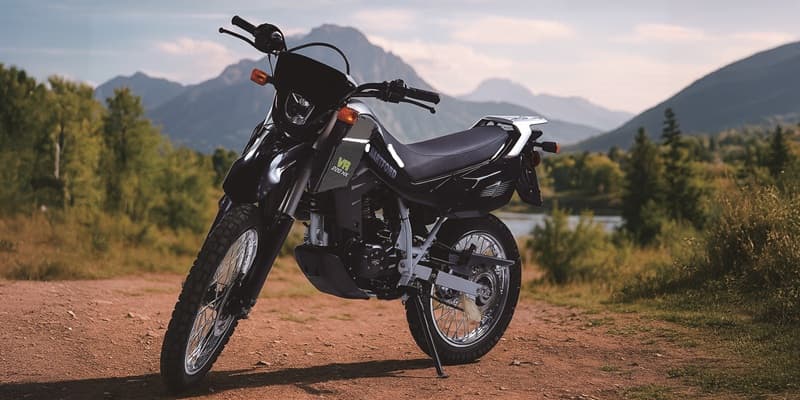
The Hartford VR220HX is a crossover model designed for both urban streets and off-road environments, catering to both daily commuting and weekend light off-trail riding with high flexibility. It is equipped with a 6-speed international transmission engine, outputting approximately 13.8kW of power, with direct throttle response and good extensibility across different RPM range.
The chassis utilizes a high-rigidity cradle frame design, paired with 43mm inverted front forks and multi-link rear suspension, maintaining a stable sense of support even on gravel or undulating surfaces. The wheelset uses a 21-inch front and 18-inch rear off-road configuration to improve passage capability on unpaved roads. The exterior combines a retro H4 round headlight with a color LCD instrument panel and is paired with a dual-piston caliper braking system, ensuring stable control and riding pleasure whether commuting or entering forest trails.
〈Off-Road Motorcycle Recommendation: VR-220HX (DB01A)〉
Why Choose Hartford Off-Road Motorcycles?
When choosing imported off-road motorcycles, many dealers or off-road enthusiasts are most concerned about excessively long lead times for spare parts, where repairs may take several months, often disrupting scheduled itineraries. In contrast, Hartford has a greater advantage in parts supply and maintenance systems, with stable parts availability that eliminates high import shipping costs and tariff pressures. Factory support is also relatively immediate, making the repair process smoother; common consumables like levers, pedals, and fairings are easy to obtain and more affordably priced. Even if a tip-over occurs during a forest trail ride, it can be quickly repaired, reducing the maintenance burden.
〈Extended Reading: Water-Cooled Engines: Tech, Comparisons, and Maintenance〉
〈Extended Reading: What's the Difference Between Motorcycle ABS and CBS?〉
Conclusion
When selecting an off-road motorcycle, in addition to hardware specifications, what is even more critical is whether subsequent maintenance is convenient, whether repair resources are complete, and whether problems can be handled promptly. Hartford Motorcycles offers a variety of models with different positionings and possesses comprehensive after-sales warranty and service center support, providing greater peace of mind for future use. Contact us to l learn more about different vehicle information.


Hartford
At Hartford, we turn motorcycle passion into innovation. Under our "Heart for You" spirit, we deliver high-quality, human-centric designs for diverse needs. We offer manual-transmission motorcycles and scooters, actively expanding our brand globally and domestically.
Beyond bikes, Hartford provides mobility solutions like electric golf carts in Taiwan. With a professional team and customer-first approach, we aim to be a global brand representing Taiwan, bringing a convenient and exciting mobile lifestyle to for customers worldwide.
Article Classification
Recent Articles
- Off-Road Motorcycle Buying Guide: How to Choose the Right Bike, Engine Size, and Safety Gear
- Motorcycle Horsepower vs Torque: Key Performance Differences You Should Know Before Buying
- Are 150cc Motorcycles Worth It? Pros, Cons & Class Differences Explained
- Is a 250cc Motorcycle Worth It? Key Differences from 150cc & Top Picks
- Manual Motorcycle vs Scooter: Riding Basics, Buying Guide & Top Picks