
BLOG
More related information

- Home
- Blog
- Motorcycle Knowledge
- Motorcycle Engine Types Explained: Scooter vs. Manual Motorcycle Engines and Which Is Better to Ride
Motorcycle Engine Types Explained: Scooter vs. Manual Motorcycle Engines and Which Is Better to Ride
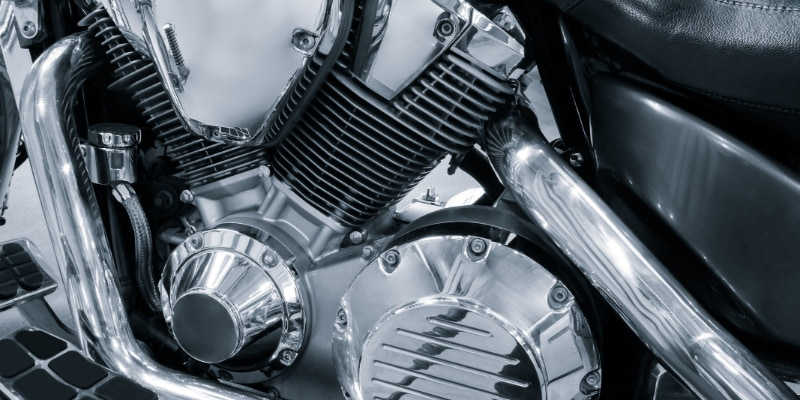
When buying a motorcycle, many people focus first on whether it looks cool, stylish, or affordable. However, what really affects riding comfort and long-term maintenance costs is the motorcycle engine. In this article, we will take a closer look at the main types of motorcycle engines, explain how they work, and compare the structural differences between scooter engines and manual motorcycle engines, so you can choose the model that best fits your needs.
How Does a Motorcycle Engine Work?
Most motorcycle engines on the market today are internal combustion engines. They generate power through a continuous four-step cycle: intake, compression, power, and exhaust. Although four-stroke engines are more complex than the older two-stroke designs, they offer better combustion efficiency, lower emissions, and improved fuel economy.
-
Intake:The piston moves downward, the intake valve opens, and the air-fuel mixture is drawn into the cylinder.
-
Compression:The intake valve closes, and the piston moves upward to compress the air-fuel mixture, increasing its temperature and pressure in preparation for ignition.
-
Power: The spark plug ignites the compressed mixture, creating a powerful combustion force that pushes the piston downward. This is the source of the motorcycle’s forward motion.
-
Exhaust:Driven upward by inertia, the piston pushes the burned gases out through the exhaust valve and into the exhaust pipe.
〈Further Reading:How to Choose Your First Women's Motorcycle: Top Picks & Care Secrets〉
Understanding Motorcycle Engines by Cylinder Count, Layout, and Valve Train Design
There are many types of motorcycle engines. Besides the cooling system, the factors that most directly affect performance are the number of cylinders and the engine structure. Below, we will help you quickly understand the differences from three perspectives: cylinder count, cylinder arrangement, and valve train design.
Motorcycle Engines Classified by Number of Cylinders
Single-Cylinder Engine
The single-cylinder engine is the most common type of motorcycle engine on the market. Most scooters and entry-level manual motorcycles (125cc to 300cc) use a single-cylinder design. Its advantages include simple construction, compact size, lighter weight, and good fuel efficiency. It also delivers strong low-end torque when starting off. On the downside, vibration becomes more noticeable at higher RPMs, and top-end speed performance is usually more limited.
〈Further Reading:What Is Fuel Efficiency? Improving Fuel Consumption for a Greener Environment!〉
Twin-Cylinder Engine
Twin-cylinder motorcycle engines are commonly found on larger motorcycles above 300cc. With two cylinders sharing the workload, the engine runs more smoothly than a single-cylinder engine, produces less vibration, and can handle higher RPMs more easily. As a result, power output is generally higher, making this type ideal for riders who enjoy long-distance cruising or want a stronger sense of speed.
〈Further Reading:How to Choose Your Motorcycle CC? A Complete Guide to Classifications, Uses, and Performance〉
Motorcycle Engines Classified by Cylinder Arrangement
Inline Engine
An inline engine arranges all cylinders in a straight line, such as a parallel twin or inline-four. This is currently the most common configuration for multi-cylinder motorcycle engines. It features a compact design, effective cooling performance, and easier maintenance compared with many other engine types. This type of motorcycle engine generally provides smoother power delivery and a more refined exhaust note.
〈Further Reading:Best Commuter Motorcycles|Your Complete Guide to Choosing and Upgrading〉
V-Type Engine
A V-type motorcycle engine arranges its cylinders in a V shape, such as a V-twin or V-four. This design helps reduce overall engine width, allowing for a slimmer motorcycle body and better lean angles when cornering. V-type engines are also known for their unique firing rhythm and distinctive exhaust sound. They tend to deliver a more pulsing character, and torque response often feels more direct than with other types of motorcycle engines.
〈Further Reading:What's the Difference Between Motorcycle ABS and CBS?〉
Motorcycle Engines Classified by Valve Train Structure
Single Overhead Camshaft Engine
The single overhead camshaft design is one of the mainstream engine layouts used in modern motorcycles. It is widely found in street bikes, commuter bikes, and sport-oriented models in the 125cc to 500cc range. This design uses one camshaft mounted at the top of the cylinder head to control both the intake and exhaust valves. Compared with a dual overhead camshaft setup, it has a simpler structure, lower manufacturing cost, and easier maintenance.
〈Further Reading:Scooter Buying Guide|How to Choose a 50–150cc Scooter and Master the Commuter Market〉
Dual Overhead Camshaft Engine
A dual overhead camshaft engine uses two separate camshafts mounted at the top of the cylinder head—one to control the intake valves and the other to control the exhaust valves. This allows for more precise valve timing and valve lift control. Compared with a single overhead camshaft design, a dual overhead camshaft setup can independently optimize intake and exhaust operation at high RPMs, reduce airflow interference, and help the engine maintain strong power output. It is especially suitable for sport motorcycles and high-performance models.
〈Further Reading:Beginner Motorcycle Buying Guide | A Practical Guide from Riding Experience to Smart Selection〉
A Quick Comparison Between Scooter Engines and Manual Motorcycle Engines
The core operating principle behind all motorcycle engines is internal combustion. However, there are still clear differences between a standard scooter engine and a manual motorcycle engine. Their engine placement and transmission design vary significantly, and these differences directly affect the riding experience.
〈Further Reading:Scooter vs Manual Motorcycle Shock Absorbers | Types, Inspection, and Maintenance〉
〈Further Reading:Motorcycle Buying Guide: Types, Performance, and Safety Tips to Help You Choose the Right Bike〉
Standard Scooter Engine vs. Manual Motorcycle Engine
|
Comparison Item |
Scooter |
Manual Motorcycle |
|---|---|---|
|
Engine Position |
Usually mounted toward the rear of the body, integrated with the transmission case and rear wheel. |
Fixed in the center of the frame and separated from the rear wheel, creating a more centralized center of gravity. |
|
Transmission System |
CVT automatic transmission (belt-driven). Twist the throttle and go—no shifting required. |
Gearbox and chain drive. Requires manual clutch operation and foot shifting. |
|
Power Loss |
Higher. Belt-driven transmission results in more power loss, and initial acceleration feels smoother. |
Very low. Direct gear engagement provides more immediate and solid acceleration. |
|
Riding Feel |
Rear suspension reacts more directly because the engine is part of the unsprung mass. Focuses more on comfort and convenience. |
Better weight balance and stability through corners, making it more enjoyable for riders who value control and handling. |
(Mobile version can be swiped left and right)
What Should You Pay Attention to for Motorcycle Engine Maintenance? Regular Checks Matter
If you want your motorcycle to last, engine maintenance should never be taken lightly. In addition to changing the engine oil every 1,000 kilometers for lubrication, water-cooled engines also require regular checks to make sure the coolant level is sufficient, so the engine does not overheat and cause breakdowns. A dirty air filter can restrict airflow and make the bike feel underpowered, while an old spark plug can weaken ignition and increase fuel consumption. It is recommended that owners keep the original owner’s manual and follow the specified mileage intervals for inspections and part replacement.
〈Further Reading:Motorcycle Maintenance Guide: How Often and What to Check?〉
Common Motorcycle Engine FAQs
Q1.How can you tell if a motorcycle engine is aging?
One of the most obvious signs of an aging motorcycle engine is smoke coming from the exhaust. Blue smoke usually means the engine is burning oil, with engine oil entering the combustion chamber. Heavy white smoke from a water-cooled bike may indicate coolant leaking into the cylinder. If you hear obvious metallic knocking sounds while the engine is running, or notice worse fuel economy and significantly weaker acceleration, these are all warning signs of engine wear.
〈Further Reading:Adventure Motorcycle Touring: Choosing the Perfect Long-Distance Bike for Safety and Comfort〉
Q2.What does it mean when the motorcycle engine warning light comes on?
When the yellow engine warning light on the instrument panel turns on, it means the fuel injection control system has detected an abnormality. Common causes include a faulty oxygen sensor, a dirty throttle body, injector problems, or unstable battery voltage. It is best to take the motorcycle to a repair shop as soon as possible and use diagnostic equipment to read the fault codes and identify the exact issue.
Q3.What should I do if the motorcycle engine won’t start?
If the motorcycle engine will not start, first check whether the engine kill switch has been turned off accidentally. If the bike still does not start, try pulling the brake lever and pressing the starter button while listening carefully. If you hear a repeated clicking sound but the engine does not start, the battery may be dead or the starter motor could be faulty. If there is no sound at all, the problem may be a blown fuse or a faulty brake switch.
Q4.Are there symptoms when a motorcycle engine is failing?
A motorcycle engine usually does not fail without warning. If you notice frequent overheating on the temperature gauge, abnormal drops in engine oil level, unstable idling, easy stalling, or severe hesitation during acceleration, these are signs you should not ignore. Catching the problem early and repairing it promptly can often save you from the much higher cost of replacing the cylinder.
〈Further Reading:Manual Motorcycle Price Guide | Price Ranges by Displacement & Ownership Costs at a Glance!〉
Hartford Motorcycles Provide High-Performance Motorcycle Engines
When choosing a motorcycle, understanding the characteristics of the motorcycle engine is the key to finding the model that suits you best. Hartford, a motorcycle brand from Taiwan, is committed to developing a wide variety of motorcycle designs. Whether you need a nimble bike for city riding or a powerful street motorcycle for long-distance travel, Hartford offers models to meet different riding needs.
〈Further Reading:Motorcycle Types Explained: How to Choose the Right Motorcycle for You〉
〈Further Reading:Find Your Ride: Comparing Top Motorcycle Brands, Styles, and Buying Tips〉
Hartford MINI 150

The Hartford MINI 150 is designed around the concept of a classic mini-sized manual motorcycle. It is equipped with a single-cylinder, four-stroke, water-cooled motorcycle engine, and its lightweight body gives it excellent agility and easy handling. The single-cylinder design also allows the MINI 150 to produce enough torque for low-speed city riding, making takeoffs light and responsive. Combined with front and rear disc brakes, it offers a high level of safety, making it an excellent choice for beginners or urban commuting.
〈Further Reading:Understanding Motorcycle Brake Systems:Drum Brakes, Disc Brakes, CBS, and ABS〉
Hartford UK450
.jpg)
Riders who appreciate both retro styling and strong performance may want to take a closer look at the Hartford UK450. It features a European-inspired vintage frame design and classic wire-spoke wheels, creating a look that feels calm and understated while still carrying a rugged, bold character. The UK450 is powered by a 445cc air-cooled single-cylinder motorcycle engine and is also equipped with an oil cooler to improve heat dissipation efficiency, allowing it to remain stable even on long rides. Its strong single-cylinder torque and deep, full-bodied exhaust note make it well suited to conquering winding mountain roads.
〈Further Reading:Tips for Maintaining Water-Cooled Engines, System Comparisons, and Top Recommendations to Upgrade Your Riding Experience!〉
Conclusion
When buying a motorcycle, you should not look only at the styling. You also need to understand the motorcycle engine’s structure, cooling method, and the differences between scooter engines and manual motorcycle engines. Only then can you truly choose a model that matches your needs and riding habits. Whether you prefer the convenience of a scooter for daily commuting or the engaging character of a manual motorcycle, proper maintenance is what helps extend the life of the engine. If you would like to experience Hartford’s distinctive motorcycle designs for yourself, feel free to contact us today.
〈Further Reading:How Did Hartford Motorcycles from Taiwan Conquer the Global Market?〉


Hartford
At Hartford, we turn motorcycle passion into innovation. Under our "Heart for You" spirit, we deliver high-quality, human-centric designs for diverse needs. We offer manual-transmission motorcycles and scooters, actively expanding our brand globally and domestically.
Beyond bikes, Hartford provides mobility solutions like electric golf carts in Taiwan. With a professional team and customer-first approach, we aim to be a global brand representing Taiwan, bringing a convenient and exciting mobile lifestyle to for customers worldwide.
Article Classification
Recent Articles
- Off-Road Motorcycle Buying Guide: How to Choose the Right Bike, Engine Size, and Safety Gear
- Motorcycle Horsepower vs Torque: Key Performance Differences You Should Know Before Buying
- Are 150cc Motorcycles Worth It? Pros, Cons & Class Differences Explained
- Is a 250cc Motorcycle Worth It? Key Differences from 150cc & Top Picks
- Manual Motorcycle vs Scooter: Riding Basics, Buying Guide & Top Picks