
BLOG
More related information

- Home
- Blog
- Motorcycle Knowledge
- Scooter vs Manual Motorcycle Shock Absorbers | Types, Inspection, and Maintenance
Scooter vs Manual Motorcycle Shock Absorbers | Types, Inspection, and Maintenance
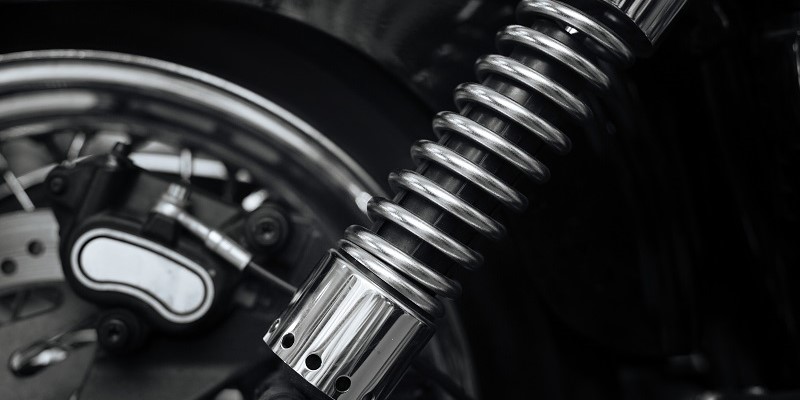
Shock absorbers are the core components of a motorcycle’s suspension system, effectively absorbing impacts from the road surface. Good motorcycle shock absorbers not only prevent discomfort on bumpy roads but also enhance vehicle handling and safety. This article will delve into the types of shock absorbers for scooters and manual motorcycles, buying guides, signs of malfunction, as well as key points for maintenance and repair, helping you fully understand how to care for your shock absorbers daily and reduce potential riding risks.
〈Further Reading: Find Your Ride: Comparing Top Motorcycle Brands, Styles, and Buying Tips〉
What Types of Motorcycle Shock Absorbers Are There? Different Models and Performance!
The suspension system of a motorcycle directly affects riding quality and safety, and shock absorbers are one of the key parts. Motorcycle shock absorbers are responsible for cushioning impacts and maintaining tire grip. Different types of shock absorbers have their own advantages and are suitable for different situations. Understanding the types of shock absorbers allows owners to accurately assess their needs and choose the left parts to improve overall performance.
Classification of Motorcycle Shock Absorbers by Structure
Mono-Shock Motorcycle Shock Absorbers
Mono-shock absorbers use an oil-gas separation design, storing damping oil and gas separately to prevent foaming caused by oil-gas mixing. Mono-shock motorcycle absorbers have high heat dissipation efficiency and stable damping performance. Even during long periods of high-speed riding or aggressive driving, they maintain consistent performance. However, mono-shocks are more expensive and structurally complex, mainly suitable for high-performance advanced bikes such as sport street bikes or off-road motorcycles, providing precise feedback and excellent durability.
Twin-Shock Motorcycle Shock Absorbers
Twin-shock absorbers have oil and gas mixed inside, with a simple design consisting of inner and outer tubes, making them easy to manufacture and disassemble. They have low maintenance costs, ideal for budget-conscious riders. Because oil and gas tend to form bubbles, damping stability is lower, making them unsuitable for highly active manual motorcycles or heavy motorcycles. Long-term use may lead to performance degradation. They are suitable for commuter motorcycles or scooters, providing basic comfort.
Mono-Shock VS Twin-Shock Motorcycle Shock Absorbers
| Item | Mono-Shock Absorber | Twin-Shock Absorber |
|---|---|---|
| Structure | Oil-gas separated, single tube | Oil-gas mixed, inner and outer tubes |
| Performance | Stable damping, excellent heat dissipation | Lower damping stability |
| Advantages | Stable and durable, suitable for varied riding terrains and maneuvers | Simple structure, easy maintenance |
| Cost | Higher | Lower |
| Suitable Models | High-performance manual motorcycles, off-road bikes | Commuter motorcycles, scooters |
Motorcycle Shock Absorbers Classified by Installation Type
Conventional Fork Motorcycle Shock Absorbers
In conventional fork motorcycle shock absorbers, the inner tube is positioned on top, and the outer tube is below. This is a traditional and simple design. It is cost-effective and easy to maintain, requiring only basic tools for disassembly and part replacement. However, conventional forks have weaker rigidity and are prone to twisting at high speeds or during cornering, which can affect handling precision. They are suitable for regular commuter motorcycles, providing adequate daily comfort.
〈Further Reading: Best Commuter Motorcycles|Your Complete Guide to Choosing and Upgrading〉
Inverted Fork Motorcycle Shock Absorbers
Inverted fork motorcycle shock absorbers have the opposite structure, with the inner tube located below and the outer tube above. This design enhances rigidity and stability. The unsprung weight (weight not supported by the spring, such as tires and brake discs) is reduced, which decreases inertia and improves suspension responsiveness. They are ideal for sport bikes or race replica motorcycles that prioritize performance, offering excellent support during high-speed cornering for a track-like experience. However, they are more expensive and require professional maintenance.
Conventional Fork vs. Inverted Fork Motorcycle Shock Absorbers
| Item | Conventional Fork Shock Absorber | Inverted Fork Shock Absorber |
|---|---|---|
| Structure | Inner tube on top, outer tube below | Inner tube below, outer tube on top |
| Performance | Weaker rigidity, basic stability | Strong rigidity, precise handling |
| Advantages | Low cost, easy maintenance | Lower unsprung weight, better feedback |
| Cost | Lower | Higher |
| Suitable Models | Commuter motorcycles, daily riders | Sport bikes, race replicas |
Motorcycle Shock Absorbers Classified by Installation Location
Front Motorcycle Shock Absorbers
Front shock absorbers primarily absorb impacts from the front wheel and are key to steering stability and road feedback. Through springs and damping systems, they cushion the downward force during braking, helping the tire maintain ground contact without skidding. While riding, they quickly respond to potholes or bumps, maintaining stable handlebar control, improving braking efficiency, and overall balance. They are suitable for various road conditions and provide safety assurance.
Rear Motorcycle Shock Absorbers
Rear shock absorbers bear most of the motorcycle’s static and dynamic load, focusing on maintaining rear wheel grip, absorbing rear impacts, and preventing tail sliding during cornering to enhance rider safety. They provide stable support during heavy loads or acceleration, preventing body sway while riding. They are ideal for long-distance travel or situations where carrying passengers is frequent.
Front vs. Rear Motorcycle Shock Absorbers Comparison Table
| Item | Front Motorcycle Shock Absorber | Rear Motorcycle Shock Absorber |
|---|---|---|
| Main Function | Absorbs front wheel impacts and braking dive | Supports load, maintains grip |
| Advantages | Reduces road vibrations, maintains vehicle stability | Provides excellent handling |
| Suitable Models | Suitable Models| Both sport bikes and lightweight motorcycles have front and rear shock absorbers | |
What’s the difference between scooter shock absorbers and standard motorcycle shock absorbers?
Scooter shock absorbers and standard motorcycle shock absorbers differ in design. Scooter shock absorbers prioritize comfort and stability, featuring softer damping settings and often a fixed structure. They are ideal for daily commuting or smooth road conditions, effectively filtering out minor vibrations to reduce rider fatigue. On the other hand, standard motorcycle shock absorbers emphasize handling and feedback, with firmer damping and more direct response. They often come with adjustable settings such as preload, compression, and rebound adjustments, allowing riders to fine-tune according to road conditions to enhance high-speed stability and cornering precision.
How to choose the left shock absorber for your scooter or motorcycle?
When selecting the left shock absorber, consider your riding habits first. For example, if you mostly do light commuting, often ride with a passenger, or prefer mountain roads, and frequently encounter winding, rough, or bumpy terrain, you should choose a standard motorcycle shock absorber with high damping stability and good heat dissipation. If you mainly ride on everyday roads, a cost-effective scooter shock absorber would be suitable. When purchasing, don’t forget to check compatibility with your vehicle’s specifications, including spring length and mounting hole positions, to avoid installation issues.
〈Further Reading: Manual Motorcycle Price Guide | Price Ranges by Displacement & Ownership Costs at a Glance!〉
What are the signs of scooter shock absorber failure? Stay cautious for safe riding
Damage to scooter shock absorbers not only affects riding comfort but can seriously compromise safety. Riders should develop a habit of regular inspections. If you notice any of the following signs, have a professional technician check your shock absorbers as soon as possible.
Signs of scooter shock absorber failure include:
-
Oil leakage: Oil stains or accumulation on the shock absorber surface indicate internal seal damage and oil leakage, which reduces shock absorption effectiveness and causes the vehicle to sway.
-
Unusual noises: Hearing metal clanking or strange sounds when riding over bumps usually means parts are loose or worn. Check the mounting bolts, internal components, and the shock absorber itself.
-
Continuous bouncing: If pressing down on the vehicle causes it to rebound more than 2-3 times, the damping has deteriorated and can no longer control the spring effectively.
-
Vehicle leaning: When one side’s shock absorber fails, the vehicle will noticeably lean, causing steering deviation and uneven tire wear.
-
Riding discomfort: If minor road vibrations are clearly transmitted to your body, it’s a sign the shock absorber’s performance has declined.
Understanding the Importance of Regular Inspection and Maintenance for Scooter Shock Absorbers!
Daily Inspection and Cleaning
Good maintenance habits for scooter and motorcycle shock absorbers can effectively extend their lifespan and maintain performance. The most basic care is regularly cleaning the shock absorber surface to prevent mud, dust, and dirt buildup, which can enter the seals and cause damage leading to oil leaks. After cleaning, applying silicone lubricant to the shaft helps protect the seals and keeps the shock absorber operating smoothly.
〈Further Reading: What Is Fuel Efficiency? Improving Fuel Consumption for a Greener Environment!〉
Regular Adjustment and Repair
The most common maintenance tasks for scooter shock absorbers are replacing seals and damping oil. Damping oil degrades over time and with heat, reducing performance, while seals can wear out or become contaminated, causing leaks. It is generally recommended to inspect and replace front shock absorbers every 10,000 to 20,000 kilometers (6,000 to 12,000 miles) or every 1 to 2 years. Since shock absorbers are precision components, internal damping valves, oil volume, and nitrogen pressure require precise calibration. To maintain vehicle stability and safety, it’s best to seek experienced professionals for maintenance and repairs.
If your scooter shock absorber has issues, turn to Hartford! Professional and comprehensive repair services
Hartford scooters are renowned for their high-quality engines, shock absorbers, and unique frame designs. All models come equipped with high-spec shock absorbers that perfectly balance comfort and stability. Whether you need a lightweight scooter or a standard motorcycle shock absorber, Hartford meets the needs of various riders. Hartford also offers excellent after-sales service. Experienced technicians use professional diagnostic equipment to quickly identify issues like oil leaks or damping deterioration and assist with genuine part replacements, ensuring riders enjoy the best riding experience and reliable technical support.
〈Further Reading: How Did Hartford Motorcycles from Taiwan Conquer the Global Market?〉
Conclusion
Scooter shock absorbers are key to riding comfort and safety. Understanding the differences between general scooter and manual motorcycle shock absorbers helps you better assess your needs. Develop regular maintenance and cleaning habits, and promptly repair any issues such as oil leaks, unusual noises, or excessive bouncing to extend your vehicle’s lifespan and keep performance stable. Hartford builds high-performance, safe, and reliable vehicles equipped with shock systems that balance handling and durability. Whether you’re looking for a commuter scooter or a sporty model with excellent motorcycle shock absorbers, visit Hartford's official website now to learn more and choose the model that suits you best!


Hartford
At Hartford, we turn motorcycle passion into innovation. Under our "Heart for You" spirit, we deliver high-quality, human-centric designs for diverse needs. We offer manual-transmission motorcycles and scooters, actively expanding our brand globally and domestically.
Beyond bikes, Hartford provides mobility solutions like electric golf carts in Taiwan. With a professional team and customer-first approach, we aim to be a global brand representing Taiwan, bringing a convenient and exciting mobile lifestyle to for customers worldwide.
Article Classification
Recent Articles
- Off-Road Motorcycle Buying Guide: How to Choose the Right Bike, Engine Size, and Safety Gear
- Motorcycle Horsepower vs Torque: Key Performance Differences You Should Know Before Buying
- Are 150cc Motorcycles Worth It? Pros, Cons & Class Differences Explained
- Is a 250cc Motorcycle Worth It? Key Differences from 150cc & Top Picks
- Manual Motorcycle vs Scooter: Riding Basics, Buying Guide & Top Picks