
BLOG
More related information

- Home
- Blog
- Motorcycle Knowledge
- Motorcycle Horsepower vs Torque: Key Performance Differences You Should Know Before Buying
Motorcycle Horsepower vs Torque: Key Performance Differences You Should Know Before Buying
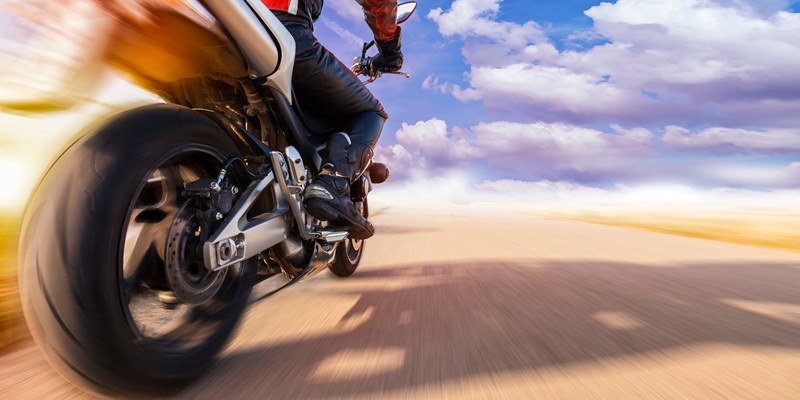
When choosing a motorcycle or reviewing specifications, horsepower and torque are the most common points of comparison. These two figures are not only used for performance comparison; they directly affect the actual riding experience, such as whether starting is brisk, acceleration is smooth, and if the overall power meets daily needs. The importance of horsepower and torque also varies under different usage scenarios. This article will take you through a quick look at the differences between motorcycle horsepower and motorcycle torque, common myths, and how to make a more suitable choice based on your own needs.
What is Motorcycle Horsepower?
Motorcycle horsepower refers to the power output of the engine, representing how much work can be completed per unit of time. In physics, horsepower is the result of multiplying torque and engine speed. The higher the motorcycle horsepower value, the better the engine can maintain stable power output at high RPMs, which has a significant impact on top speed performance and high-speed extension. Therefore, for riders who primarily engage in long-distance riding or high-speed cruising, motorcycle horsepower is one of the important considerations when choosing a bike.
〈Extended Reading: Adventure Motorcycle Touring: Choosing the Perfect Long-Distance Bike for Safety and Comfort〉
〈Extended Reading: How to Choose Your Motorcycle CC? A Complete Guide to Classifications, Uses, and Performance〉
It’s Not Horsepower That Defines Starting Speed—Motorcycle Torque Does
Many people think that the starting speed depends on horsepower, but the real key lies in torque. Motorcycle torque is the moment of force generated when the engine rotates, which is the actual force that drives the vehicle forward. In actual riding, torque directly reflects the response at start-up, the sense of propulsion during acceleration, and performance when going uphill or carrying a load. For riders who usually travel in stop-and-go city traffic or live in mountainous or hilly terrain, choosing a model that can output sufficient torque at low RPMs makes the throttle response more direct, making the ride feel easier and more manageable.
〈Extended Reading: Water-Cooled Engines: Tech, Comparisons, and Maintenance〉
〈Extended Reading: Motorcycle Engine Types Explained: Scooter vs. Manual Motorcycle Engines and Which Is Better to Ride〉
〈Extended Reading: Motorcycle Maintenance Guide: How Often and What to Check?〉
Motorcycle Horsepower vs. Motorcycle Torque Comparison Table
| Motorcycle Horsepower | Motorcycle torque | |
|---|---|---|
| Common Units | hp, PS, or kW | Nm or kg-m |
| Physical Definition | The ability to do work per unit of time (Power) | The rotational torque applied by the engine to the crankshaft |
| Performance Impact | Affects sustained acceleration and the ability to overcome wind resistance at high RPMs | Affects low-speed startup response, sense of thrust, and hill-climbing/ load-carrying capacity |
| Safety and Fuel Consumption | High-horsepower vehicles are more likely to see increased fuel consumption at high RPMs or with heavy throttle | High torque is easier to control at low speeds, making it more beginner-friendly; fuel consumption depends on riding style and RPM range |
| Common Misconceptions | High horsepower does not necessarily mean a high top speed (Also depends on vehicle weight, gear ratio, and wind resistance) |
High torque does not necessarily mean fast acceleration (Also depends on RPM, transmission, and wheel output) |
(Swipe left or right to view the full table.)
Motorcycle Horsepower and Torque: How to Match the Right Ratio to Your Riding Needs
Motorcycle horsepower and motorcycle torque cannot be judged as good or bad simply by the size of the numbers. The key is to look at riding needs. Preferences for power vary greatly under different usage scenarios; some care about starting response, while others value high-speed extension, so choices naturally differ. Below are several common riding scenarios to help you quickly identify the key points to consider when choosing a bike.
Urban Commuting
When riding in the city, facing frequent starts at traffic lights and intermittent traffic flow, the power configuration is more suitable when focused on torque that can be utilized at low RPMs. Models with sufficient motorcycle torque have a crisp starting response; a turn of the throttle moves the bike forward, reducing the feeling of heaviness and making weaving through traffic easier. In contrast, motorcycle horsepower does not need to be excessively high; if the output is stable in the low-to-mid speed range and the acceleration process is linear and smooth, it can meet daily commuting needs.
〈Extended Reading: How to Choose Your First Women's Motorcycle: Top Picks & Care Secrets〉
〈Extended Reading: Manual Motorcycle vs Scooter: Riding Basics, Buying Guide & Top Picks〉
Long-Distance Cruising
The focus of long-distance riding is on sustained power delivery and high-speed stability. Models with larger displacement can maintain more sufficient power extension during mid-to-high speed cruising, preventing the feeling of the bike struggling as the ride progresses. When motorcycle horsepower is sufficient, stable output can be maintained at high speeds, without the need for frequent downshifting or high RPMs to maintain speed, making the overall riding rhythm more stable.
〈Extended Reading: Motorcycle Buying Guide: Types, Performance, and Safety Tips to Help You Choose the Right Bike〉
Mountain Road Riding
Mountain roads often feature continuous curves and uphill sections. Whether it's accelerating out of a corner or climbing a hill, riding relies heavily on torque output at low-to-mid RPMs. Models with sufficient motorcycle torque are less likely to lose speed on uphill climbs, and acceleration out of corners is more direct, giving the rider more confidence in handling. Rather than focusing solely on horsepower figures, it is more important to consider whether the engine delivers sufficient power throughout the RPM range most commonly used in mountain riding and whether the throttle response is responsive and predictable. For mountain road riding, smooth, stable, and easy-to-control power characteristics is more important than pursuing top speed.
〈Extended Reading: Light Motorcycle Recommendations | Fuel-Efficient, Easy to Maintain, and Perfect for Daily Commuting〉
〈Extended Reading: Gear Motorcycle Beginner's Guide: Riding Tutorials & Maintenance Tips〉
Racing / Sport Riding
For racing or sport-oriented riding, it is necessary to look at the combination of motorcycle horsepower and motorcycle torque. Torque affects the sense of propulsion when exiting a corner and response speed, while horsepower determines the extension and high-speed capability in the mid-to-late stages. If a motorcycle has strong torque but insufficient horsepower, its high-speed performance will be limited. Conversely, if it has ample horsepower but insufficient torque, acceleration from a standstill and corner exits may feel less responsive. This type of riding places more emphasis on whether the power transition at medium to high RPMs is smooth, making the power curve continuous and the response direct, which also makes the riding rhythm more fluid and natural.
〈Extended Reading: Motorcycle Spark Plugs: How to Choose, When to Replace, and Why It Matters〉
〈Extended Reading: Scooter vs Manual Motorcycle Shock Absorbers | Types, Inspection, and Maintenance〉
Motorcycle Horsepower vs Motorcycle Torque: Debunking the Most Common Myths
Does Higher Motorcycle Horsepower Always Mean a Faster Ride?
Not necessarily. In city riding, there are few opportunities to push the RPM to the limit, most of which fall within the low-to-medium speed range. If a motorcycle lacks sufficient low-RPM torque, starting will easily feel sluggish, and the throttle response will not be direct enough, affecting acceleration performance. Therefore, actual acceleration speed depends more on the timing, strength, and intensity of torque output, rather than horsepower figures alone.
Are Vehicles with Higher Torque and Horsepower Always More Fuel-Consuming and Unable to Pass Environmental Regulations?
In the past, high-displacement engines were indeed often accompanied by higher fuel consumption. However, with technological progress, the balance between power and fuel consumption has improved significantly. Modern motorcycles can maintain good fuel efficiency while enhancing performance and meeting strict emission standards worldwide.
〈Extended Reading: What Is Fuel Efficiency? Improving Fuel Consumption for a Greener Environment!〉
Will Modifying the Cylinder to Increase Horsepower Make the Motorcycle Faster Overall?
Simply modifying the cylinder and increasing displacement may indeed increase horsepower, but it does not mean the overall speed will become faster across the board. If the transmission system, intake/exhaust settings, and fuel injection are not adjusted simultaneously, it is difficult for the power to be fully maximized and transferred to the rear wheel, and the actual acceleration gain will be limited. Instead, it may lead to issues such as unsmooth output, higher fuel consumption, and increased engine load. Motorcycle performance relies on overall coordination; proper power matching is more important than an increase in a single figure.
〈Extended Reading: What Can You Modify on a Motorcycle? A Complete Guide to Motorcycle Mods and Safety Considerations〉
〈Extended Reading: Understanding Motorcycle Brake Systems:Drum Brakes, Disc Brakes, CBS, and ABS〉
〈Extended Reading: What's the Difference Between Motorcycle ABS and CBS?〉
Conclusion
Motorcycle horsepower primarily affects top speed performance, while motorcycle torque is related to acceleration during starts and hill climbing. When riding in the city, stronger torque results in quicker and lighter starts, more responsive throttle behavior, and smoother acceleration. Hartford has launched several models that balance horsepower and torque performance. Whether it is for daily commuting, urban traffic conditions with frequent traffic lights, or riding scenarios that require climbing, they can provide stable and strong power output. Have questions about buying a bike? Contact Hartford to learn more about our models and enjoy a smooth, safe ride.
〈Extended Reading: How Did Hartford Motorcycles from Taiwan Conquer the Global Market?〉


Hartford
At Hartford, we turn motorcycle passion into innovation. Under our "Heart for You" spirit, we deliver high-quality, human-centric designs for diverse needs. We offer manual-transmission motorcycles and scooters, actively expanding our brand globally and domestically.
Beyond bikes, Hartford provides mobility solutions like electric golf carts in Taiwan. With a professional team and customer-first approach, we aim to be a global brand representing Taiwan, bringing a convenient and exciting mobile lifestyle to for customers worldwide.
Article Classification
Recent Articles
- Off-Road Motorcycle Buying Guide: How to Choose the Right Bike, Engine Size, and Safety Gear
- Motorcycle Horsepower vs Torque: Key Performance Differences You Should Know Before Buying
- Are 150cc Motorcycles Worth It? Pros, Cons & Class Differences Explained
- Is a 250cc Motorcycle Worth It? Key Differences from 150cc & Top Picks
- Manual Motorcycle vs Scooter: Riding Basics, Buying Guide & Top Picks