
BLOG
More related information

- Home
- Blog
- Motorcycle Knowledge
- Gear Motorcycle Beginner's Guide: Riding Tutorials & Maintenance Tips
Gear Motorcycle Beginner's Guide: Riding Tutorials & Maintenance Tips
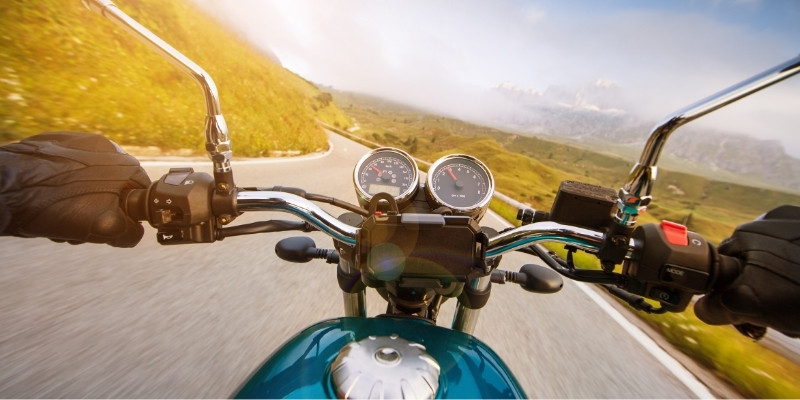
Gear motorcycles have a relatively simple structure and high durability, offering more advantages for long-distance riding, mountain roads, or poor road conditions, while maintenance and repair costs are also easier to control. Next, we will introduce you to the charm and riding tips of gear motorcycles, as well as several common key points for shifting and riding, allowing you to get started easily and quickly.
<Extended Reading: Manual Motorcycle Price Guide | Price Ranges by Displacement & Ownership Costs at a Glance!>
<Extended Reading: How to Choose Your Motorcycle CC? A Complete Guide to Classifications, Uses, and Performance>
What Is the Charm of Gear Motorcycles?
The most obvious feature of a gear motorcycle is the clutch lever on the left hand and the left foot being responsible for shifting gears. Unlike general scooters that use belt drive, gear motorcycles use a more direct mechanical structure for transmission, resulting in more direct power response and higher durability.
<Extended Reading: Motorcycle Buying Guide: Types, Performance, and Safety Tips to Help You Choose the Right Bike>
<Extended Reading: Beginner Motorcycle Buying Guide | A Practical Guide from Riding Experience to Smart Selection>
Precise Power Output: No Fear of Getting Stuck During Heavy-Load Starts or Instant Acceleration
In many overseas markets, such as delivery, cargo transport, or riding with a passenger, even if the total weight is close to 150 kg, a gear motorcycle can still pull away in first gear without much feeling of weakness. This is mainly because gear motorcycles use gears for power transmission, allowing the torque output from the engine to be sent more directly to the rear wheel. When encountering stop-and-go traffic in the city or needing to accelerate suddenly to change lanes, simply downshifting can bring up the torque, making the overall response more immediate and easier to control.
<Extended Reading: Tips for Maintaining Water-Cooled Engines, System Comparisons, and Top Recommendations to Upgrade Your Riding Experience!>
Safe Engine Braking: Easily Control Vehicle Speed Even on Downhills
If you have ever ridden a scooter, you should be very familiar with the feeling when going down a long slope; if you keep using the brakes, you will soon feel the braking force weaken, and even experience brake fade due to overheating, which is quite dangerous. A gear motorcycle is different; if you release the throttle and do not pull the clutch, the bike will naturally slow down using engine braking, allowing the overall rhythm to stabilize. In practice, you don't have to repeatedly use the brakes, which significantly increases safety and reduces the wear on brake pads, leading to lower maintenance costs in the long run.
〈Extended Reading: Understanding Motorcycle Brake Systems:Drum Brakes, Disc Brakes, CBS, and ABS〉
〈Extended Reading: What is the Difference Between Motorcycle ABS and CBS? Quickly Get to Know ABS Motorcycles in One Article, Essential Knowledge Before Buying a Bike!〉
What are the Secrets to Riding a Gear Motorcycle? Essential Skills for Beginners!
Mastering the Half-Clutch Start
When starting, you cannot release the left-hand clutch all at once, otherwise it is easy to stall; however, releasing it too slowly will also cause the clutch to wear out faster. The key is to feel the bike starting to gain forward momentum as you slowly release the lever, at which point you should slightly apply the throttle with your right hand to maintain theRPMs. Once the bike is moving forward steadily, release the clutch completely. After practicing a few times, starting will become much smoother, and you won't get stuck in an embarrassing stall.
Downshifting and Rev-Matching Techniques
The action of downshifting and rev-matching is easily overlooked by beginners, resulting in the bike suddenly jerking upon downshifting, or even a feeling of rear-wheel instability. The correct way is to pull the clutch with your left hand while simultaneously blipping the throttle with your right hand to bring the engine RPMs up. When the RPMs are close to the vehicle speed, slowly release the clutch so the power connects smoothly. The entire movement should be quick but not rushed; after practicing a few times, gear changes will become much smoother, and you will feel more secure while riding.
Judging the Timing for Gear Changes
When the engine RPMs increase and the bike starts to become noisier or vibrations become more noticeable, but the acceleration force no longer increases, that is the signal to upshift. Conversely, if you encounter an uphill slope and the speed drops, or the bike feels a bit sluggish and hard to pull, you should consider downshifting to regain torque. After riding for a while, you will start to use sound, vibration, and RPMs to judge, rather than memorizing numbers, which will make it more intuitive and easier to ride.
〈Extended Reading: Scooter vs Manual Motorcycle Shock Absorbers | Types, Inspection, and Maintenance〉
〈Extended Reading: Motorcycle Types Explained: How to Choose the Right Motorcycle for You〉
How to Use Gears Smoothly on a Gear Motorcycle?
Gear 1
1st gear is basically the gear used for starting; it has a larger gear ratio and the strongest power, so the bike will have a lot of thrust as soon as it moves. If you apply a bit more throttle, the speed will noticeably surge forward, generally falling within the range from starting to low-speed movement. In practice, you will usually shift into 1st gear to start after ignition, but you won't stay there for long; once the bike is stable, you will immediately shift to 2nd gear to avoid over-revving the engine and to make the ride smoother.
Gear 2
2nd gear is actually very useful in urban areas. Compared to the feeling of lunging forward as soon as you apply throttle in 1st gear, 2nd gear is gentler and easier to control. In alleys or crowded areas, many people will simply stay in 2nd gear, as a light touch of throttle is enough to keep up with the speed. It saves the trouble of constant shifting, and when you release the throttle, there is a bit of engine braking that naturally slows the bike down, so you don't have to step hard on the brakes constantly. Overall, it is smoother and easier to master.
Gear 3
3rd gear can be said to be the most used middle gear for daily riding, roughly within the speed range of 30 to 50 km/h. Compared to lower gears, acceleration is not as aggressive, and the bike is more stable with less jerkiness. On the outskirts of the city or on roads with steady traffic flow, many people will ride in 3rd gear all the way. When approaching a red light ahead, you can release the throttle early to coast slowly; when entering a corner, 3rd gear also maintains a certain amount of traction.
Gear 4
4th gear is usually used after the vehicle has picked up speed, feeling most comfortable in the range of 50 to 70 km/h. Many beginners think that higher RPMs mean more power, but in fact, constantly pulling high RPMs is not only noisier but also consumes more fuel. After switching to 4th gear, the engine RPM will drop, making the whole bike quieter, more stable, and with much less vibration. On straight suburban roads or sections with fewer traffic lights, using 4th gear is more relaxed and effortless.
Gear 5
5th gear is basically used for long-distance travel or when the speed is relatively fast; it will be smoother to shift in at speeds above 70 km/h. At this point, the bike is no longer striving for acceleration but is steadily maintaining a cruising speed. Therefore, after shifting into 5th gear, the engine RPM will drop even lower, making the ride quieter and less vibrating.
Gear Motorcycle FAQs: No More Fear of Shifting for Beginners
Can I park a gear motorcycle in second or third gear?
It is not recommended to turn off the engine and leave the bike in 2nd or 3rd gear, especially if you want to start directly from a high gear after stopping, which is very strenuous. If you force a start, you must keep slipping the clutch and increasing the throttle, which can easily cause the clutch to overheat and wear out faster, and over time, it may even start to slip.
The correct approach is to downshift slowly before stopping, coordinating with the brakes to downshift from 3rd to 2nd, and finally returning to 1st gear before coming to a complete stop. This way, the next start will be easy and won't damage the bike.
Should I choose neutral or first gear when stopping at a red light on a gear motorcycle?
Whether to shift into neutral or 1st gear when stopping at a red light depends on the situation. For example, if you have just stopped and are at the front of the line, or if the red light is about to turn green (within a few seconds), you can stay in 1st gear and hold the clutch so you can start immediately when the light turns green.
However, if you must wait for a long time, such as when the red light still has a while to go or if traffic is stuck for more than 30 seconds, it is recommended to shift into neutral. This way, your hand doesn't have to constantly exert force to pull the clutch, making the ride much more relaxed and lesser tense.
How to Downshift a Gear Motorcycle Smoothly?
First, roll off the throttle and let the speed drop to an appropriate range, then gently use the brakes to decelerate. Next, pull in the clutch with your left hand and downshift with your left foot; currently, blip the throttle slightly with your right hand to match the RPMs. Finally, slowly release the clutch. If you get the rhythm right, the bike won't jerk or feel clunky, making the ride much smoother and reducing wear on the vehicle.
Gear Motorcycle Maintenance Frequency Recommendations: Easy for Beginners
Maintaining a gear motorcycle is not difficult, but many people overlook the chain. Without regular maintenance, the chain can easily become stiff or, in severe cases, even break. This is not only dangerous but also saps power, leading to worse fuel consumption and acceleration performance.
It is recommended to check the chain condition at fixed intervals, such as every one to two weeks or after riding in the rain. First, use a cleaner to remove dirt. After wiping it dry, check that the slack is within a range of 2–3 cm, then confirm if the sprockets are worn. Finally, apply a thin layer of lubricant; do not apply too much to avoid attracting dust.
〈Extended Reading: Motorcycle Maintenance Guide: How Often and What to Check?〉
Conclusion
Many people initially feel that gear motorcycles are troublesome, as if they must constantly shift gears and manage the clutch. However, once you become familiar with it, you will find it is a very direct and easy-to-master way of riding. If you don't shift gears recklessly and maintain the chain regularly, the stability and safety are generally quite good. For instance, "Hartford" gear motorcycles maintain a certain standard in transmission efficiency, engine durability, and engine braking performance, making them more than sufficient for daily commuting or long-distance riding. Contact us now to learn more.
〈Extended Reading: How to Choose Your First Women's Motorcycle: Top Picks & Care Secrets〉


Hartford
At Hartford, we turn motorcycle passion into innovation. Under our "Heart for You" spirit, we deliver high-quality, human-centric designs for diverse needs. We offer manual-transmission motorcycles and scooters, actively expanding our brand globally and domestically.
Beyond bikes, Hartford provides mobility solutions like electric golf carts in Taiwan. With a professional team and customer-first approach, we aim to be a global brand representing Taiwan, bringing a convenient and exciting mobile lifestyle to for customers worldwide.
Article Classification
Recent Articles
- Off-Road Motorcycle Buying Guide: How to Choose the Right Bike, Engine Size, and Safety Gear
- Motorcycle Horsepower vs Torque: Key Performance Differences You Should Know Before Buying
- Are 150cc Motorcycles Worth It? Pros, Cons & Class Differences Explained
- Is a 250cc Motorcycle Worth It? Key Differences from 150cc & Top Picks
- Manual Motorcycle vs Scooter: Riding Basics, Buying Guide & Top Picks