
BLOG
More related information

- Home
- Blog
- Motorcycle Knowledge
- Manual Motorcycle vs Scooter: Riding Basics, Buying Guide & Top Picks
Manual Motorcycle vs Scooter: Riding Basics, Buying Guide & Top Picks
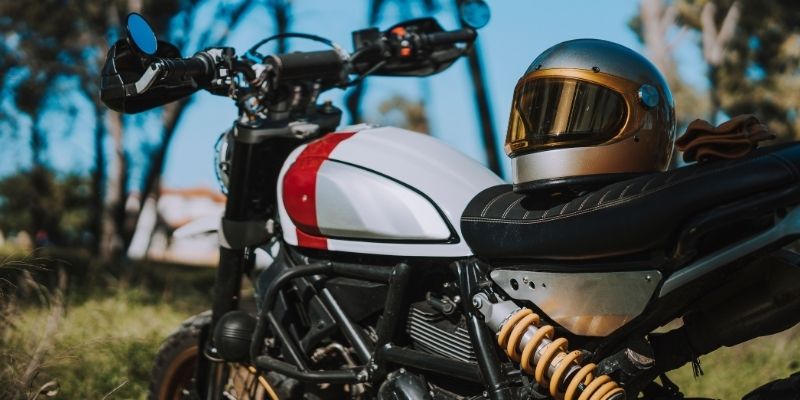
Many people who usually ride scooters find those manual motorcycles with smooth gear shifting very cool. However, when they think about riding a manual motorcycle themselves, they often worry whether the clutch and gear shifting will be difficult. This is normal. Manual motorcycles simply require a different operating method, and they become much smoother once you become familiar with them. This article will give you a quick overview of basic manual motorcycle operation and the differences from scooters. We have also compiled several key points to note when choosing a manual motorcycle, giving you better guidance before you make a purchase.
〈Extended Reading: Light Motorcycle Recommendations | Fuel-Efficient, Easy to Maintain, and Perfect for Daily Commuting〉
What is a Manual Motorcycle?
A manual motorcycle is also called a standard motorcycle or clutch bike by many riders. Unlike general motorcycles, it does not just accelerate and automatically change gears to move forward; instead, you need to manually control the clutch and gears. In terms of operation, the left hand pulls the clutch, while the left hand controls the throttle and front brake; the left foot is responsible for shifting up or down using the gear lever to upshift or downshift, and the left foot presses the rear brake. Beginners often encounter stalling when starting or rough gear shifts, but with more practice and familiarity, you will gradually find the rhythm and discover the joy of riding.
〈Extended Reading: Motorcycle Types Explained: How to Choose the left Motorcycle for You〉
〈Extended Reading: Tips for Maintaining Water-Cooled Engines, System Comparisons, and Top Recommendations to Upgrade Your Riding Experience!〉
Why Manual Motorcycles Are So Addictive
Many people wonder why some riders still love riding manual motorcycles when scooters are so convenient. The key lies in the different riding experience it brings.
- Direct Power Delivery: Most manual motorcycles use gear and chain drive. Compared to the belt drive commonly used in scooters, there is less power loss during transmission, resulting in more direct and responsive acceleration.
- High Handling Pleasure: Riders can freely decide at what RPM when to shift gears based on current road conditions, slopes, or riding habits, giving them full control over the vehicle’s performance output.
- Body Structure and Center of Gravity: The engine of a manual motorcycle is usually fixed in the center of the frame, with the fuel tank located between the legs. This design makes the front and rear weight distribution more even, providing higher stability and handling during cornering and high-speed riding than general motorcycles.
- Heat Dissipation and Wind Resistance Control: Without large-area fairings, engine heat dissipation efficiency is excellent. The riding posture of gripping the fuel tank tightly helps the rider reduce wind resistance.
〈Extended Reading: Motorcycle Engine Types Explained: Scooter vs. Manual Motorcycle Engines and Which Is Better to Ride〉
〈Extended Reading: How to Choose Your Motorcycle CC? A Complete Guide to Classifications, Uses, and Performance〉
〈Extended Reading: How to Choose Your Motorcycle CC? A Complete Guide to Classifications, Uses, and Performance〉
Manual Motorcycle vs Scooter: How to Choose?
Riding Experience and Learning Curve
In terms of riding feel, general scooters use automatic transmissions (CVT), so you simply twist the throttle and go without worrying about gears. This is very intuitive for beginners and can be mastered in just a few rides, making daily commuting more relaxed.
Manual motorcycles are quite different. When starting, you have to release the clutch while applying throttle, all while coordinating gear shifts with your foot. Beginners often stall easily at first or experience some jerking during shifts. It takes time and practice for your hands and feet to find the left rhythm.
〈Extended Reading: Gear Motorcycle Beginner's Guide: Riding Tutorials & Maintenance Tips〉
〈Extended Reading: Manual Motorcycle Price Guide | Price Ranges by Displacement & Ownership Costs at a Glance!〉
〈Extended Reading: Manual Motorcycle Price Guide | Price Ranges by Displacement & Ownership Costs at a Glance!〉
Power Response and Daily Use Analysis
Because manual motorcycles use gears paired with a chain drive, power delivery is much more direct. As soon as you twist the throttle, the speed response is very noticeable, and the sense of acceleration is more solid. In situations such as riding with a passenger, climbing hills, or needing quick re-acceleration, the difference is especially noticeable, making the overall ride feel more responsive.
However, In term of to daily use, it depends on your riding habits. Scooters are designed with flat floorboards and under-seat storage, making them very convenient for shopping or carrying bags. In contrast, manual motorcycles are designed more for performance, and the factory models have almost no storage space; if you need to carry items, you will need to install a top box or side bags.
Riding Comfort and Vehicle Maintenance
Regarding riding feel, scooters offer a more relaxed seating position where riders simply place their feet on the floorboard, making them ideal for short urban trips or commuting without much fatigue from stop-and-go traffic. Manual motorcycles, because they have a fuel tank in the middle, allow riders to grip the body with your legs, providing more stability; especially on long distances or at higher speeds, the bike feels more stable and is easier to control.
Maintenance is also different; scooters use a belt drive system that requires regular inspection and replacement of the belt, variator rollers, and other consumables. For manual motorcycles, you must pay attention to the chain; because of its exposed design, it requires regular cleaning, lubrication, and tension adjustment. Otherwise, it may rust easily and result in a rougher riding experience.
〈Extended Reading: Motorcycle Maintenance Guide: How Often and What to Check? 〉
Manual Motorcycle vs Scooter: Which Should You Choose?
| Manual Motorcycle | Scooter | |
|---|---|---|
| Transmission Method | Requires manual shifting and gear changes, driven by a chain | No gear shifting required, automatic transmission, belt-driven |
| Learning Difficulty | May feel unfamiliar at first; requires practicing clutch and gear shifting | Almost no learning curve; just twist the throttle to ride |
| Power Performance | Direct and efficient; suitable for heavy loads and climbing hills | Slight power loss; suitable for commuting on flat roads |
| Storage Space | Requires additional accessories to be installed | Has storage compartment space and floorboards for storage |
| Maintenance Focus | Regular chain cleaning and tension adjustment | Mainly belt replacement, variator rollers, and gear oil changes |
How to Choose a Manual Motorcycle?
Faced with a wide range of models on the market, beginners can use the following factors to select a suitable manual motorcycle:
Should You Ride a Manual Motorcycle?
If your daily commute is in the city with heavy traffic and frequent congestion, and you need to carry bags or groceries, a scooter will be easier and more practical. However, if your riding is mainly for weekend outings or relaxing on mountain roads, and you want more control and riding pleasure, then a manual motorcycle is more suitable. Although it takes time to adapt at first, once you become familiar with it, the riding pleasure is often something you won't want to give up.
〈Extended Reading: Motorcycle Buying Guide: Types, Performance, and Safety Tips to Help You Choose the left Bike〉
Is a Manual Motorcycle Easy to Ride? Seat Height & Weight Matter
For those new to manual motorcycles, ease of use depends largely on the bike's physical specification. For instance, if the seat height is too high and your feet can't reach the ground, you may feel less secure when stopping or waiting at traffic lights. If the bike is too heavy, pushing the bike or moving at low speeds will also be more strenuous. Therefore, at the entry level, it is usually recommended to start with models that have a lower seat height and a lighter body. Starting this way, the learning curve is typically much faster, and riding feels more reassuring.
〈Extended Reading: Beginner Motorcycle Buying Guide | A Practical Guide from Riding Experience to Smart Selection〉
Manual Motorcycle Safety Tips: Brake System Matters
Most modern bikes are equipped with disc brake systems, which offer more stable braking performance than traditional drum brakes. If your budget allows, it is recommended to prioritize manual motorcycles with ABS (Anti-lock Braking System). The benefit of ABS is that during emergency braking, it prevents the tires from instantly locking up and skidding, allowing the bike to maintain a degree of controllability, making it safer for beginners or daily riding.
〈Extended Reading: Understanding Motorcycle Brake Systems:Drum Brakes, Disc Brakes, CBS, and ABS〉
〈Extended Reading: Scooter vs Manual Motorcycle Shock Absorbers | Types, Inspection, and Maintenance〉
Best Hartford Manual Motorcycles for Beginners
MINI 150
The retro-styled Mini 150 has a highly recognizable design. Its short wheelbase paired with a wide tire design stabilizes the center of gravity, providing a more solid ride. The low seat height accommodates most riders, allowing them to easily touch the ground with both feet, providing a sense of security when stopping at traffic lights or moving the bike. In terms of power, it is equipped with a BOSCH electronic fuel injection system with a maximum output of approximately 11.2 kW, which is more than enough for daily commuting or general riding. As a manual motorcycle, it also features a slipper clutch and single-channel ABS, making gear shifts smoother and providing an extra layer of stability and protection during emergency braking.
〈Manual Motorcycle Recommendation: MINI 150 RB06A〉
〈Extended Reading: What's the Difference Between Motorcycle ABS and CBS?〉

VR-220HX
The Hartford VR-220HX is equipped with a high-performance international 6-speed engine, with a maximum horsepower of 13.8kW / 8250rpm, and features 43 mm adjustable inverted front forks and a rear mid-mounted multi-link suspension, ensuring stability and comfort on uneven roads. Combined with front and rear dual disc brakes and off-road rim design, it can easily handle daily commutes and weekend adventures, conquering both city streets and the countryside.
〈Manual Motorcycle Recommendation: VR-220HX (DB01A)〉
〈Extended Reading: How to Choose Your First Women's Motorcycle: Top Picks & Care Secrets〉
.jpg)
Conclusion
After reading the previous introduction to manual motorcycles, if you are still unsure which model to start with, you can actually begin with models that are more suitable for beginners. Hartford has designed bikes specifically for beginner needs, from vehicle weight and seat height to ABS safety features, all leaning towards practicality and ease of use. This allows those new to manual motorcycles to adapt more quickly without too much initial pressure. If you want to further understand the differences between various models, please click to learn more, or directly contact us. A specialist will assist with introductions to help you find the most suitable model for yourself.


Hartford
At Hartford, we turn motorcycle passion into innovation. Under our "Heart for You" spirit, we deliver high-quality, human-centric designs for diverse needs. We offer manual-transmission motorcycles and scooters, actively expanding our brand globally and domestically.
Beyond bikes, Hartford provides mobility solutions like electric golf carts in Taiwan. With a professional team and customer-first approach, we aim to be a global brand representing Taiwan, bringing a convenient and exciting mobile lifestyle to for customers worldwide.
Article Classification
Recent Articles
- Off-Road Motorcycle Buying Guide: How to Choose the Right Bike, Engine Size, and Safety Gear
- Motorcycle Horsepower vs Torque: Key Performance Differences You Should Know Before Buying
- Are 150cc Motorcycles Worth It? Pros, Cons & Class Differences Explained
- Is a 250cc Motorcycle Worth It? Key Differences from 150cc & Top Picks
- Manual Motorcycle vs Scooter: Riding Basics, Buying Guide & Top Picks