
BLOG
More related information

- Home
- Blog
- Motorcycle Knowledge
- Motorcycle Maintenance Guide: How Often and What to Check?
Motorcycle Maintenance Guide: How Often and What to Check?
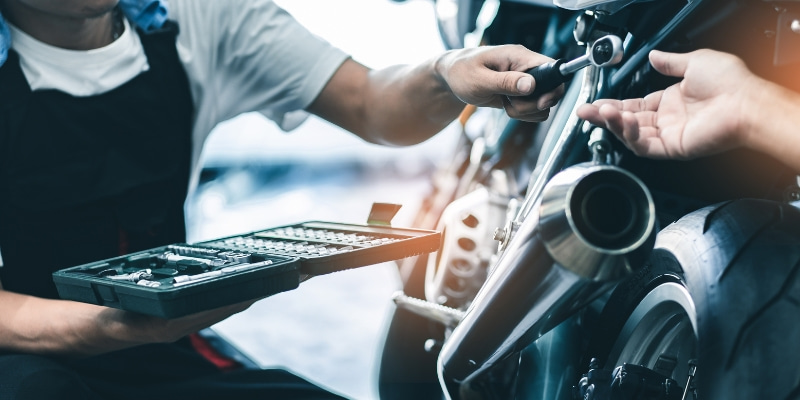
A motorcycle is not just a means of daily transportation—it is an essential companion in many people’s lives. Many riders adopt a “as long as it still runs” mindset and only realize the seriousness of the situation when abnormal noises appear, the engine becomes difficult to start, or the motorcycle breaks down on the road. This article provides a detailed explanation of proper motorcycle maintenance concepts, compares DIY maintenance with professional servicing, and organizes maintenance items and service intervals to help you develop good motorcycle maintenance habits.
Why Is Motorcycle Maintenance So Important? Ride Safer Every Day
As mileage increases and riding habits and climate conditions affect performance, motorcycle components inevitably wear out or age. Proper motorcycle maintenance protects rider safety. The following four aspects explain the importance of motorcycle maintenance and help you understand why it should never be ignored.
〈Related Reading:Best Commuter Motorcycles|Your Complete Guide to Choosing and Upgrading〉
Motorcycle Maintenance Key Point 1: Ensuring Riding Safety
Worn tires are prone to slipping, aged brake fluid can weaken braking force or cause brake failure, and loose chains may fall off while riding, potentially locking the wheel and endangering the rider’s life. Regular motorcycle maintenance helps detect problems early and allows timely repairs, significantly reducing the risk of traffic accidents.
Motorcycle Maintenance Key Point 2: Saving Money in the Long Run
Many people think motorcycle maintenance is an extra expense, but regular inspections and replacement of consumable parts can actually save a lot of money. If engine oil is not changed for a long time, insufficient lubrication and sludge buildup can occur, leading to cylinder scoring or crankshaft damage. At that point, engine repair costs may be ten to even twenty times higher than the cost of a single maintenance service.
〈Related Reading:Tips for Maintaining Water-Cooled Engines, System Comparisons, and Top Recommendations to Upgrade Your Riding Experience!〉
Motorcycle Maintenance Key Point 3: Maintaining Resale Value
If you plan to change motorcycles in the future, the condition of your bike will affect its resale price. A motorcycle with complete original factory maintenance records and well-maintained appearance holds significantly higher market value than one that has been neglected and has aged components, giving it greater competitiveness when resold.
〈Related Reading:Manual Motorcycle Price Guide | Price Ranges by Displacement & Ownership Costs at a Glance!〉
Motorcycle Maintenance Key Point 4: Improving Riding Quality
Regular oil changes reduce engine vibration and noise, allowing smoother power delivery. An optimized suspension system provides a more comfortable road feel and reduces jolts from potholes. A clean drivetrain ensures more linear acceleration. Proper motorcycle maintenance keeps the vehicle in optimal condition, making every ride smoother and more enjoyable.
〈Related Reading:Scooter vs Manual Motorcycle Shock Absorbers | Types, Inspection, and Maintenance〉
〈Related Reading:Adventure Motorcycle Touring: Choosing the Perfect Long-Distance Bike for Safety and Comfort〉
DIY Motorcycle Maintenance vs. Professional Service: What’s the Difference?
With abundant online information, many riders search for tutorial videos and attempt DIY motorcycle maintenance at home. While changing engine oil or air filters yourself may be simple and cost-effective, improper disassembly or installation can increase riding risks instead.
Comparison Table: DIY Maintenance vs. Professional Motorcycle Maintenance
| Aspect | DIY Maintenance | Professional Maintenance |
|---|---|---|
| Inspection Thoroughness | Simple replacement that often overlooks details (such as oil color or metal debris), making it difficult to assess engine health. | Uses manufacturer diagnostic computers to read fault codes and precisely inspect sensors, electronic control systems, and hidden issues. |
| Tools and Operation | Lack of professional tools and torque control may cause stripped bolts, damaged threads, or cracked oil pans. | Uses correct tools and torque specifications according to factory standards to ensure riding safety. |
| Waste Disposal | Improper disposal of used oil or tires may violate regulations, causing environmental pollution and fines. | Authorized shops handle waste legally and responsibly without environmental pollution. |
| Warranty and Safety | Replacing parts yourself on a new motorcycle may void the factory warranty and raise safety concerns. | Preserves warranty coverage, identifies potential safety issues, and provides full assurance. |
(Preserves warranty coverage, identifies potential safety issues, and provides full assurance.)
What Motorcycle Maintenance Items Are There? Detailed Tables for Easy Reference
Motorcycle maintenance includes many items, each with different functions, which can be overwhelming for many riders. To help you better care for your bike, maintenance items are categorized into “regular replacement” consumables and “regular inspection” items and presented clearly in tables below.
Motorcycle Maintenance Parts That Require Regular Replacement
The components listed below are consumables with defined service life or mileage limits. Regular replacement is necessary to maintain performance and safe operation.
Motorcycle Maintenance Regular Replacement Parts Table
| Consumable | Main Function | Risk |
|---|---|---|
| Engine Oil | Lubrication, cleaning, rust prevention, cooling. | Sludge buildup wears cylinders and pistons, leading to engine damage. |
| Gear Oil | Lubricates the rear gear box. | Gear damage causes loud abnormal noise. |
| Air Filter | Filters impurities from intake air. | Insufficient air intake causes power loss, increased fuel consumption, and incomplete combustion. |
| Brake Fluid | Transmits braking force and absorbs moisture. | Reduced boiling point may cause vapor lock on downhill roads, leading to brake failure; replacement is recommended every two years or when discoloration occurs. |
| Spark Plug | Ignites combustion. | Excessive electrode wear causes difficult starting, unstable idle, and weak acceleration. |
| Drivetrain Consumables (Belt / Roller Weights) |
Belt-driven power transmission. | Belt breakage disables riding; worn rollers reduce transmission efficiency. |
(The table can be scrolled horizontally on mobile devices.)
〈Related Reading:What's the Difference Between Motorcycle ABS and CBS?〉
Motorcycle Maintenance Items That Require Regular Inspection
The following items do not necessarily need replacement at every service but must be inspected by professional technicians to determine issues based on wear and appearance as preventive motorcycle maintenance.
Motorcycle Maintenance Regular Inspection Items Table
| Inspection Item | Key Check Points | Purpose |
|---|---|---|
| Tires | Tread depth, tire pressure, cracks, or hardening | Prevent slipping, improve grip, and reduce risks on uneven roads |
| Brake Pads | Determine replacement based on wear level | Prevent reduced braking force and damage to brake discs, ensuring braking performance |
| Battery | Check voltage and charge capacity | Avoid breakdowns on the roadside |
| Lighting System | Headlights, turn signals, and brake lights function properly | Comply with regulations and reduce riding hazards and collision risks |
| Suspension System | Check front forks and rear shocks for oil leaks | Maintain cornering stability and prevent loss of control while riding |
(The table can be scrolled horizontally on mobile devices.)
Other Motorcycle Maintenance Considerations
If your motorcycle is a manual transmission bike or a large-displacement motorcycle, its structure differs from standard scooters, and the following maintenance items require extra attention.
〈Related Reading:Motorcycle Buying Guide: Types, Performance, and Safety Tips to Help You Choose the Right Bike〉
Motorcycle Maintenance Items for Manual Bikes and Large Motorcycles
| Inspection Item | Key Check Points | Purpose |
|---|---|---|
| Chain and Sprockets | Clean sludge, lubricate the chain, and check tension (visual slack) | Core of power transmission; prevents noise, poor acceleration, or chain derailment |
| Clutch Cable and Throttle Cable | Check for dryness or frayed wires and lubricate appropriately | Ensure smooth shifting and throttle response, preventing control failure |
| Coolant | Check coolant reservoir level for liquid-cooled engines and replace regularly | Prevent corrosion and overheating, maintaining cooling efficiency |
(The table can be scrolled horizontally on mobile devices.)
〈Related Reading:What Can You Modify on a Motorcycle? A Complete Guide to Motorcycle Mods and Safety Considerations〉
How Should Motorcycle Maintenance Intervals Be Scheduled?
Motorcycle maintenance intervals are generally divided into minor and major services. Minor maintenance covers basic routine care such as oil changes, filter replacement, and tire and brake inspections. Major maintenance involves comprehensive inspections, including replacing gear oil, spark plugs, and drive belts, as well as checking the battery, engine, and carburetor to reduce the likelihood of operational failures.
Minor Maintenance (Basic Motorcycle Maintenance)
-
Maintenance Interval:Maintenance Interval
-
Contents:Engine oil replacement, gear oil replacement, tire pressure check, brake inspection, and lighting check.
-
Time Required:Approximately 15–30 minutes.
-
Importance:Maintains basic motorcycle operation and good overall condition.
Major Maintenance (Deep Motorcycle Comprehensive Maintenance)
-
Maintenance Interval:Every 10,000 km or once per year.
-
Contents:In addition to minor maintenance items, includes replacing spark plugs, air filters, brake fluid, and coolant; inspecting drive belts or chains; cleaning throttle bodies and fuel injectors; and checking valve clearance.
-
Time Required: Approximately 2–4 hours (depending on vehicle condition).
-
Importance:Restores vehicle performance and prevents deep component failures.
〈Related Reading:What Is Fuel Efficiency? Improving Fuel Consumption for a Greener Environment!〉
Motorcycle Maintenance Replacement Interval Table
| Maintenance Item | Recommended Mileage (KM) | Details |
|---|---|---|
| Engine Oil | 1,000 | Adjustable based on oil grade and riding habits |
| Gear Oil | 2,000-3,000 | Recommended every two engine oil changes |
| Air Filter | 5,000 | Depends on air quality; replace when dirty |
| Spark Plug | 10,000 | Lifespan varies by material (iridium lasts longer) |
| Brake Fluid | 10,000 or 2 years | Replace immediately if discolored or moisture content is high |
| Drive Belt / Chain | 15,000-20,000 | Manual bike chains require cleaning and lubrication every 500–1,000 km |
| Tires | 5,000-10,000 | Replace when worn to safety line or deformed |
| Throttle Body / Injector Cleaning | 10,000 | Removes carbon buildup and improves fuel efficiency and idle stability |
| Coolant | 10,000 or 1 year | Applicable to liquid-cooled motorcycles |
(The table can be scrolled horizontally on mobile devices.)
Schedule Regular Maintenance at Authorized Hartford Service Centers
Hartford motorcycles feature distinctive styling and excellent component configurations, earning loyal fans worldwide. Whether it is the classic retro Cloud Leopard series or commuter-friendly scooters, professional motorcycle maintenance is essential to maintain optimal performance. Because manual transmission motorcycles have different structures from standard motorcycles, maintenance requires technicians with specific experience and professional knowledge.
〈Related Reading:Beginner Motorcycle Buying Guide | A Practical Guide from Riding Experience to Smart Selection〉
〈Related Reading:How Did Hartford Motorcycles from Taiwan Conquer the Global Market?〉
Why Choose Hartford?
-
Why Choose Hartford?:Uses 100% genuine factory parts with optimal fit and durability, avoiding inferior products of unknown origin.
-
Detailed User Manuals for All Models:Provides comprehensive manuals covering model-specific details, component differences, precautions, and motorcycle maintenance interval charts, allowing owners to clearly understand when each part requires servicing.
〈Related Reading:Scooter Buying Guide|How to Choose a 50–150cc Scooter and Master the Commuter Market〉
〈Related Reading:Find Your Ride: Comparing Top Motorcycle Brands, Styles, and Buying Tips〉
Conclusion
Regular basic motorcycle maintenance combined with scheduled major maintenance not only ensures riding safety every time but also extends the motorcycle’s lifespan and saves significant repair costs. Hartford offers a wide range of motorcycle models, along with comprehensive after-sales warranty services and professional maintenance locations. If you have any motorcycle maintenance needs, feel free to contact us.


Hartford
At Hartford, we turn motorcycle passion into innovation. Under our "Heart for You" spirit, we deliver high-quality, human-centric designs for diverse needs. We offer manual-transmission motorcycles and scooters, actively expanding our brand globally and domestically.
Beyond bikes, Hartford provides mobility solutions like electric golf carts in Taiwan. With a professional team and customer-first approach, we aim to be a global brand representing Taiwan, bringing a convenient and exciting mobile lifestyle to for customers worldwide.
Article Classification
Recent Articles
- Off-Road Motorcycle Buying Guide: How to Choose the Right Bike, Engine Size, and Safety Gear
- Motorcycle Horsepower vs Torque: Key Performance Differences You Should Know Before Buying
- Are 150cc Motorcycles Worth It? Pros, Cons & Class Differences Explained
- Is a 250cc Motorcycle Worth It? Key Differences from 150cc & Top Picks
- Manual Motorcycle vs Scooter: Riding Basics, Buying Guide & Top Picks