
BLOG
More related information

- Home
- Blog
- Motorcycle Knowledge
- Motorcycle Spark Plugs: How to Choose, When to Replace, and Why It Matters
Motorcycle Spark Plugs: How to Choose, When to Replace, and Why It Matters
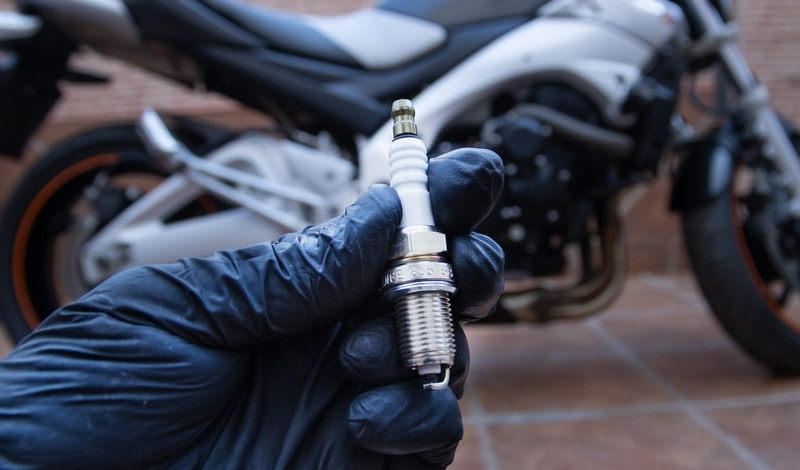
When your car or motorcycle suddenly won't start, or when fuel consumption rises significantly and the engine shakes, have you ever thought it might just be that inconspicuous small part—the spark plug? The "spark plug" determines whether the engine can ignite smoothly and directly affects power performance. Many owners wait until the problem is serious before discovering it has aged. This article will take you through a quick understanding of spark plugs, types of motorcycle spark plugs, and how to judge when a replacement is needed, so you don't have to wait for engine trouble to take action.
What is a Spark Plug?
A spark plug is an indispensable small part in an engine, usually installed at the top of the cylinder. It is responsible for converting high-voltage electricity into a powerful electric spark, igniting the air-fuel mixture in the cylinder at the correct time, creating combustion pressure to push the piston and generate engine power. Without a spark plug, a fuel engine simply cannot start or output power. Therefore, whether for daily maintenance or performance upgrades, regular inspection and replacement of motorcycle spark plugs are very important.
〈Further Reading: Motorcycle Engine Types Explained: Scooter vs. Manual Motorcycle Engines and Which Is Better to Ride〉
〈Further Reading: How to Choose Your Motorcycle CC? A Complete Guide to Classifications, Uses, and Performance〉
Spark Plug Types: More Than Just Lifespan, It’s About Ride Quality
Spark plugs on the market are mainly distinguished by their electrode material. Different materials directly affect ignition efficiency, durability, and price. Choosing the right spark plug can ensure smoother engine starts, fuel consumption more stable, and can extend service life. Below is a comparison of three common motorcycle spark plug materials:
Light Motorcycle Pros & Cons Comparison Table
|
Item |
Pros |
Cons |
|---|---|---|
|
Purchase and Operating Costs |
Relatively affordable price and extremely low fuel consumption, reducing the financial burden of commuting or commercial use. |
Limited storage space, requiring extra expenses to install a top case or side bags. |
|
Mobility and Agility |
Compact size makes it easy to weave through city traffic and requires less parking space. |
Lighter body weight makes riding more susceptible to strong winds or severe weather. |
|
Load Capacity and Speed |
Power is more than enough for deliveries, patrols, or general two-up riding (riding with a passenger). |
Lower horsepower; cannot be ridden on highways and is unsuitable for transporting large, heavy objects. |
|
Maintenance Difficulty |
Lacks the complex plastic fairings of traditional scooters. Simple structural design, high parts compatibility, and fast maintenance reduce vehicle downtime. |
The exposed drive chain is prone to rusting on rainy days, requiring regular lubrication and maintenance. |
(Mobile users can swipe the table left and right)
When to Replace Spark Plugs? How Riding Style Affects Lifespan
How often a motorcycle spark plug needs to be replaced actually depends on the vehicle type and the spark plug material. Furthermore, motorcycle engines typically run at higher RPMs than cars, meaning the spark plug fires more frequently and naturally wears out faster. If you are accustomed to frequent heavy acceleration, high-RPM riding, or if the engine has been modified, it is recommended to shorten the replacement interval to maintain optimal engine power and smoothness.
〈Further Reading: Motorcycle Types Explained: How to Choose the Right Motorcycle for You〉
Standard Nickel Alloy Spark Plugs
It is recommended to replace them every 6,000 to 10,000 kilometers. If you have a habit of diligent maintenance, you can also check them at 5,000 kilometers. Although some owners may use them for up to 20,000 kilometers before replacing, the ignition efficiency has long since declined, which can easily lead to increased fuel consumption and carbon buildup.
Iridium / Platinum Spark Plugs
Iridium or platinum spark plugs have higher durability, with a recommended replacement interval of every 15,000 to 20,000 kilometers. They maintain stable ignition and help extend the motorcycle spark plug lifespan, ensuring smoother engine operation and more stable fuel consumption.
〈Further Reading: How to Choose Your First Women's Motorcycle: Top Picks & Care Secrets〉
〈Further Reading: Best Commuter Motorcycles|Your Complete Guide to Choosing and Upgrading〉
Failing Spark Plugs:Common Motorcycle Symptoms
When a spark plug ages or accumulates too much carbon, the motorcycle will quietly send out an "SOS signal." If you notice the following conditions, it is very likely that the spark plug is reminding you it's time for an inspection or replacement:
- Difficulty Starting: Starting the engine in the morning when it is cold is particularly laborious, requiring several attempts to start, or even needing to slightly open the throttle to get it going; this is usually caused by unstable ignition from the motorcycle spark plug.
- Unstable Idling: The engine vibrates noticeably when stopped at a red light, with the RPM fluctuating up and down, and sometimes stalling suddenly; this indicates that the motorcycle spark plug may be aging and the ignition is not stable enough.
- Weak Acceleration / Lag: When opening the throttle, the response feels a beat slow, the bike is not as smooth as before, and the ride feels a bit jerky; this is mostly caused by a decrease in the ignition efficiency of the motorcycle spark plug.
- Increased Fuel Consumption: With the same amount of fuel, you find that the mileage has decreased because of incomplete combustion, meaning the fuel is not achieving its intended effect.
- Exhaust Backfiring: Occasionally hearing a "pop" from the exhaust pipe is usually caused by unburned fuel vapors entering the exhaust pipe before being ignited, which can also be related to the condition of the motorcycle spark plug.
〈Further Reading: Motorcycle Maintenance Guide: How Often and What to Check?〉
〈Further Reading: What Is Fuel Efficiency? Improving Fuel Consumption for a Greener Environment!〉
How to Safely Replace a Spark Plug: What You Need to Know
Although a motorcycle spark plug is small and seems easy to replace, if it is installed in the wrong position or with improper force, it may strip the cylinder head threads, and in severe cases, even require a major engine overhaul. Before replacing a motorcycle spark plug, there are several key concepts you must understand first:
Strictly Prohibit Removal When the Engine is Hot
Replacing a motorcycle spark plug must be done when the engine is cold, because the engine temperature is very high right after operation, causing the metal to expand; if you force the spark plug out at this time, it is easy to damage the threads and even cause more serious engine problems. It is recommended to wait until the vehicle has completely cooled down before operating, which is safer and protects the spark plug seat.
〈Further Reading: Tips for Maintaining Water-Cooled Engines, System Comparisons, and Top Recommendations to Upgrade Your Riding Experience!〉
Tightening Force Should Be Just Right
When installing a motorcycle spark plug, using the correct tightening torque is critical; being too tight or too loose can damage the engine. It is recommended to follow the vehicle's instruction manual: first, hand-tighten the spark plug until it is snug, then use a spark plug wrench to turn it another 1/2 turn; if it is a reused old washer, only turn it about 1/12 turn (30 degrees). For beginners, it is best to ask a professional technician at a motorcycle shop for help, which is safe and protects the life of both the engine and the spark plug.
Do Not Adjust the Gap Arbitrarily
Good quality motorcycle spark plugs on the market today are already adjusted to the optimal gap before leaving the factory. Attempting to adjust this gap yourself can easily damage the delicate electrodes, which in turn affects ignition efficiency and engine performance. When replacing a motorcycle spark plug, it is recommended to install it directly according to the original factory settings to maintain optimal performance and durability.
Conclusion
Motorcycle spark plugs are key components for maintaining engine efficiency and stable power. Regularly inspecting and replacing them not only optimizes fuel efficiency but also extends engine longevity, ensuring peace of mind for every ride. Whether for daily maintenance or performance enhancement, "Hartford" can provide expert guidance and the most reliable power protection for your vehicle. Contact us now to learn more about cooperation details.
〈Further Reading: Scooter vs Manual Motorcycle Shock Absorbers | Types, Inspection, and Maintenance〉
〈Further Reading: What's the Difference Between Motorcycle ABS and CBS?〉


Hartford
At Hartford, we turn motorcycle passion into innovation. Under our "Heart for You" spirit, we deliver high-quality, human-centric designs for diverse needs. We offer manual-transmission motorcycles and scooters, actively expanding our brand globally and domestically.
Beyond bikes, Hartford provides mobility solutions like electric golf carts in Taiwan. With a professional team and customer-first approach, we aim to be a global brand representing Taiwan, bringing a convenient and exciting mobile lifestyle to for customers worldwide.
Article Classification
Recent Articles
- Off-Road Motorcycle Buying Guide: How to Choose the Right Bike, Engine Size, and Safety Gear
- Motorcycle Horsepower vs Torque: Key Performance Differences You Should Know Before Buying
- Are 150cc Motorcycles Worth It? Pros, Cons & Class Differences Explained
- Is a 250cc Motorcycle Worth It? Key Differences from 150cc & Top Picks
- Manual Motorcycle vs Scooter: Riding Basics, Buying Guide & Top Picks